The Arabian Oryx: From Extinction in the Wild to a UAE Desert Success Story
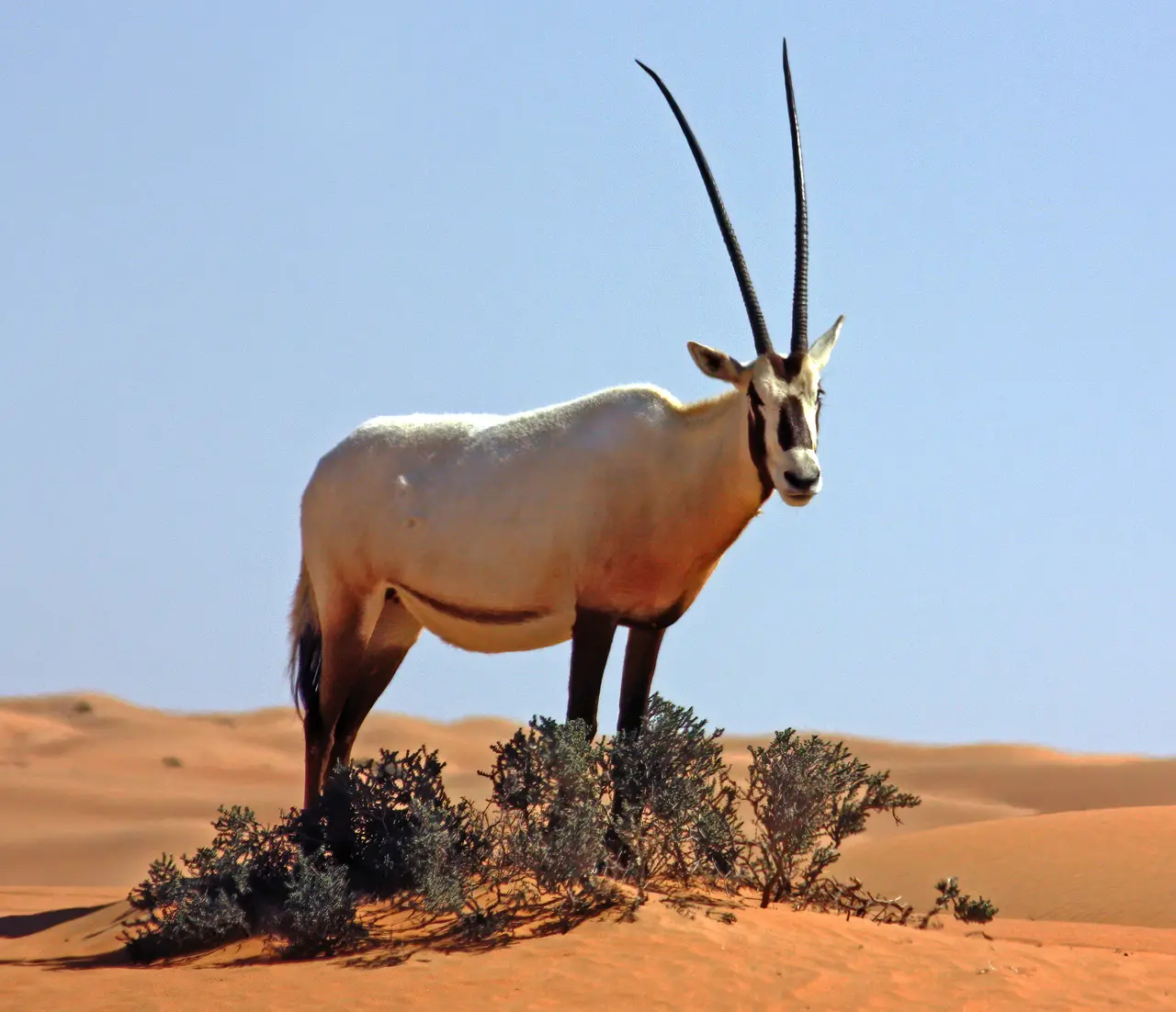
Few animals say as much about Arabian conservation as the Arabian oryx (Oryx leucoryx). A pale, long-horned antelope built for the desert, it was hunted to extinction in the wild in the early 1970s. Today it lives again in the sands and gravel plains of the Arabian Peninsula, and the UAE is one of the places where that recovery can be seen.
From the Brink of Extinction
For centuries the oryx roamed the deserts of Arabia. Hunting, especially with motor vehicles and modern rifles, wiped out the last wild herds. The last known wild oryx in Oman was killed in the Jiddat al-Harasis in 1972. Survival depended on a small number of animals held in captivity, and on breeding programmes that treated those animals as a shared insurance policy for the whole species. The animals bred in captivity became the founders of herds later returned to the wild in Oman and across the region.
The conservation story did not end with breeding. The IUCN Red List moved the species from Endangered to Vulnerable in 2011, one of the first times an animal declared extinct in the wild had recovered enough to be downlisted. That progress is real, but it is also fragile: populations in the wild remain small and depend on continued protection.
An Animal Built for the Desert
The oryx is adapted to heat and scarcity in ways that repay close attention:
- Pale coat: a light colour that reflects sunlight, helping the animal tolerate intense heat.
- Wide hooves: broad hooves spread its weight on soft sand.
- Water efficiency: oryx can go long periods without drinking, drawing moisture from the plants they eat, and they travel widely to find grazing after rain.
- Daily rhythm: they rest in shade during the hottest hours and feed in the cooler parts of the day.
The oryx is also part of Emirati culture and heritage, appearing in poetry and in the national imagery of the Gulf. That cultural weight is one reason reintroduction has attracted lasting public support.
Reintroduction in the UAE
In the UAE, oryx are held and managed in protected areas and reserves, and conservation agencies have taken part in reintroduction work in Abu Dhabi's desert landscapes. Protected reserves such as Sir Bani Yas Island and desert conservation areas in Dubai and Abu Dhabi support managed populations. Releasing animals into the wild is a long process that includes habitat assessment, health screening, monitoring and community engagement.
Why Reintroduction Is Hard
A herd can only thrive if the land can support it. Reintroduction teams look at the following questions before and after a release:
- Is there enough forage and, where needed, water? Grazing pressure from livestock or too many animals can degrade the same plants the oryx rely on.
- Is the genetic base broad enough? Small founder populations risk inbreeding, so managers track lineages carefully.
- Is the animal safe from poaching and disturbance? Fencing, patrols and public awareness all matter.
- Is the animal being followed? Monitoring through observation and tracking shows whether released animals survive and breed.
What the Oryx Tells Us About Desert Ecosystems
Desert ecosystems are often mistaken for empty ones. In reality, ghaf woodland, gravel plains and sand dunes support grazers, small mammals, reptiles, insects and birds. A large grazer such as the oryx moves seeds, shapes plant growth patterns and forms part of the food web. Restoring it is therefore about restoring a function as well as a species.
Reptiles share these desert habitats too. The UAE National Red List rates one spiny-tailed lizard, Uromastyx aegyptia microlepis, as Vulnerable, with urban development and road construction among the named threats. The same pressures that make a species harder to protect on land apply to grazers such as the oryx, so a healthy desert depends on keeping habitat connected. See our article on spiny-tailed lizards and the national Red List.
Frequently Asked Questions
Is the Arabian oryx still endangered? It is classed as Vulnerable on the IUCN Red List, an improvement from Endangered, but wild populations are small and need continued protection.
Can visitors see oryx in the UAE? Oryx can be seen in several protected reserves and desert conservation areas. Visitors should follow site rules and keep their distance.
Is the oryx the same as the white oryx in photographs? Yes, the Arabian oryx is often called the white oryx because of its pale coat, with darker markings on the face and legs.
Related: Abu Dhabi Mangroves: A Carbon and Biodiversity Powerhouse