Abu Dhabi Mangroves: A Carbon and Biodiversity Powerhouse
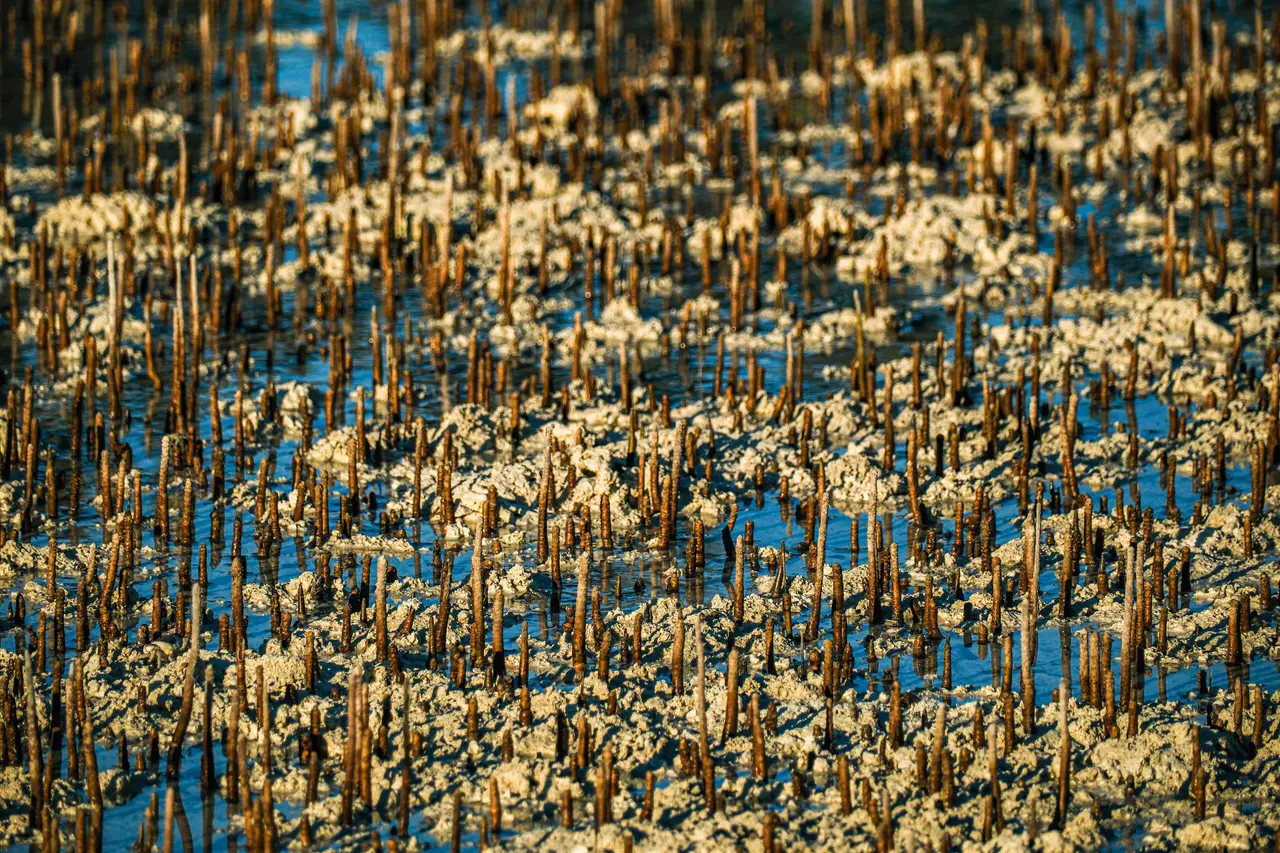
Abu Dhabi's mangrove forests, stretching along 300 kilometers of coastline and covering over 160 square kilometers, represent one of the Arabian Peninsula's most significant ecological assets. Dominated by the grey mangrove (Avicennia marina), these coastal forests have expanded significantly under active government restoration programs, now making them the focal point for Gulf blue carbon investment.
The carbon sequestration potential of Abu Dhabi's mangroves is substantial. Studies conducted by New York University Abu Dhabi estimate average belowground carbon stocks of 120-180 tonnes CO2 equivalent per hectare in established mangrove stands — among the highest in the Arabian region. The combination of aboveground biomass and belowground peat accumulation makes mangroves particularly valuable for carbon accounting.
Beyond carbon, Abu Dhabi's mangroves provide critical habitat for endangered species including Socotra cormorants, Western reef herons, and hawksbill sea turtles. This biodiversity value, when certified under standards such as Plan Vivo or the Biodiversity Credit Alliance framework, creates additional revenue streams for mangrove conservation projects.
A Working Coastal Ecosystem
The value of a mangrove stand is not only what it stores. The dense network of roots slows tidal water and traps fine sediment, which helps stabilise shorelines in a region of shallow, low-energy coasts. Among the roots, juvenile fish, crabs and prawns find shelter, so mangrove lagoons act as nurseries that support coastal fisheries well beyond the forest edge. Pneumatophores, the pencil-like breathing roots that rise from the mud around grey mangroves, are a familiar sight at low tide and a reminder that these trees thrive in salinity that would kill most plants.
Why Carbon Figures Differ Between Sites
A single per-hectare figure for mangrove carbon hides a lot of variation. Stocks depend on species, salinity, the type of sediment, and how regularly tidal water reaches the roots. A stand that is flushed by the tide often builds up sediment and organic matter differently from one that has been cut off by a causeway or drainage works, which is why the hydrology of a site matters as much as the number of trees planted. Soil is usually the largest store, so the depth of sampling and the method used to measure it can move the result considerably.
When a seller quotes a carbon figure, ask three things: which carbon pools it includes, how deep the soil was sampled, and whether the number was measured at the project site or taken from a published average for a different location. A figure taken from a regional study can be a useful starting point, but it is not the same as a measurement of the credited area.
Restoration Depends on Water, Not Only Planting
Planting seedlings is the visible part of mangrove restoration, but the outcome depends mostly on whether the tide reaches the site. Seedlings set in ground that is too high, too low or cut off from tidal flow often fail, because the trees need regular inundation and a suitable salinity to establish. Before planting, a credible project records ground elevation, the tidal range, the sediment type and any natural regeneration nearby. Seedlings that appear unaided are often the best guide, because they show that the conditions already suit the species.
Frequently Asked Questions
Which mangrove species grows in the UAE? The grey mangrove, Avicennia marina, is the dominant species along UAE coasts. Small stands of Rhizophora mucronata have also been planted in Abu Dhabi in the past.
Why are mangroves important for biodiversity? They provide nesting, roosting and feeding habitat for birds, nursery habitat for marine life, and a buffer between land and sea.
Are mangroves only a carbon story? No. Carbon storage is one benefit alongside habitat, coastal protection and fisheries support, and healthy restoration depends on getting tidal flow and site selection right.
How long does mangrove carbon take to build up? Carbon accumulates over years and decades, mostly in the soil. A short monitoring period captures only part of the long-term store, which is why credible projects set out a measurement schedule from the start.
The Abu Dhabi Environment Agency (EAD) has partnered with international carbon standard bodies to establish a robust certification pathway for UAE mangrove credits. The UAE's extensive coastal mangrove and seagrass ecosystems represent significant emerging potential for biodiversity credit development across the region.
Related: Avicennia marina: The Grey Mangrove That Holds the UAE Coast | Sea Turtles and Seagrass: The UAE's Coastal Wildlife and Why It Matters for Biodiversity Credits