Sea Turtles and Seagrass: The UAE's Coastal Wildlife and Why It Matters for Biodiversity Credits
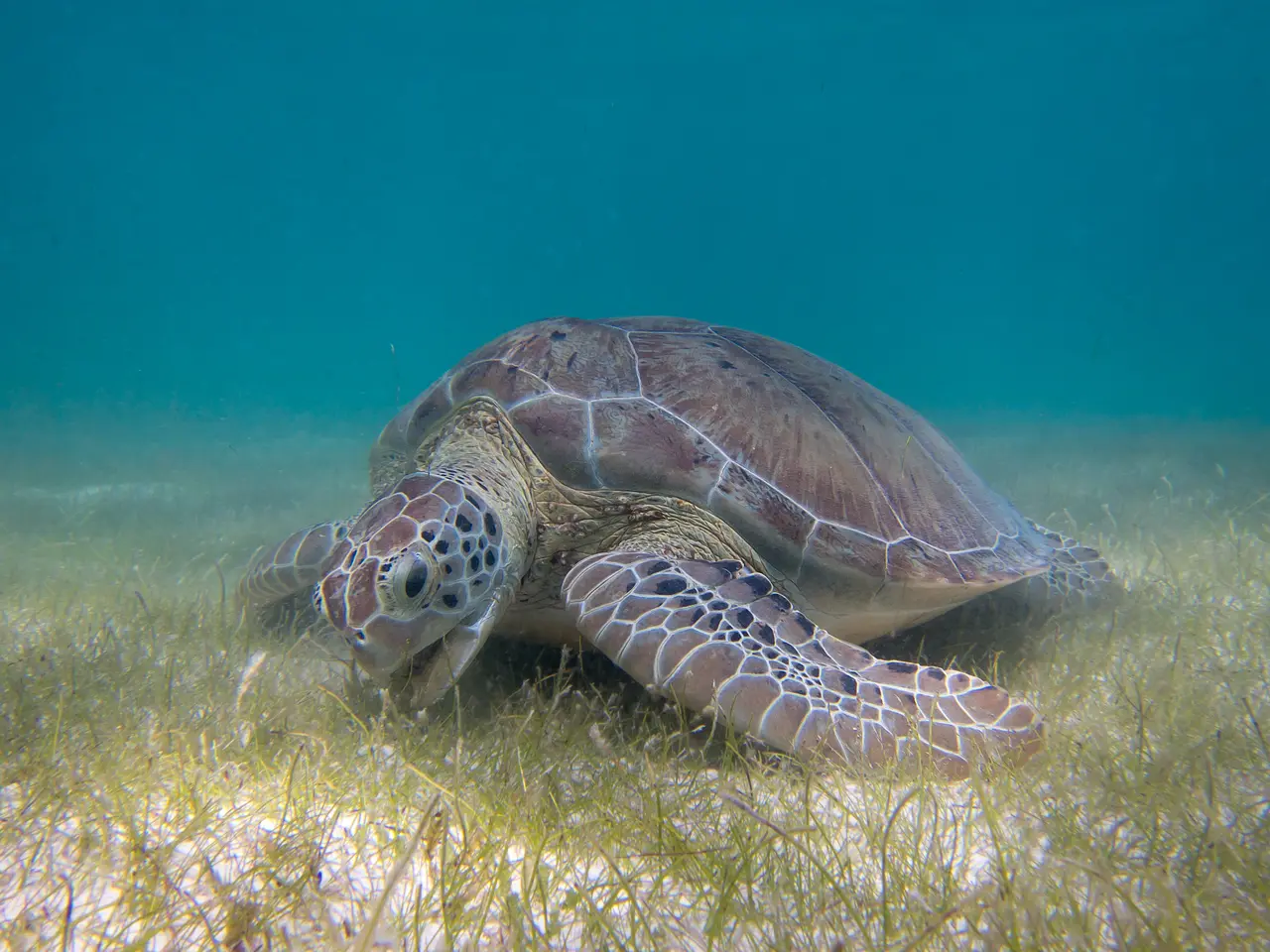
Walk a UAE beach at night in the warmer months and you may find tracks in the sand that lead back to the sea. They belong to sea turtles, and they are a reminder that the coastline is part of a wider marine ecosystem. Turtles, dugongs and the seagrass meadows they depend on are among the most important wildlife of the Arabian Gulf and the Gulf of Oman, and they are central to the debate about biodiversity credits.
Which Turtles Use UAE Waters
Several sea turtle species occur in UAE waters, but two are especially relevant to coastal conservation:
- Hawksbill turtle: listed as Critically Endangered by the IUCN. It nests on sandy beaches and feeds mainly on sponges and other reef organisms, so reef health matters as much as beach health.
- Green turtle: listed as Endangered by the IUCN. Adults are largely herbivorous and graze on seagrass, which makes healthy meadows essential to their diet.
Turtles travel widely. An animal that nests on one stretch of coast may feed in another part of the Gulf, so protecting them depends on protecting a connected network of beaches, reefs and seagrass.
Seagrass: The Pasture Under the Water
Seagrass meadows are underwater flowering plants that form dense beds on shallow, sandy seabeds. They stabilise sediment, filter water and store carbon in the soil beneath them. They are also a food source for green turtles and dugongs. The dugong, a marine mammal listed as Vulnerable by the IUCN, feeds on seagrass and depends on the same shallow waters as the turtles.
Because seagrass supports several species at once, it is a useful indicator of coastal health. A meadow that is shrinking or turning murky usually signals pressure from dredging, coastal construction or nutrient runoff.
Warm Sand and Hatchling Numbers
Sea turtle eggs develop in sand, and the temperature of that sand affects the young. In sea turtles the sex of a hatchling is set by incubation temperature: warmer sand produces more females, cooler sand more males. Very high temperatures can also reduce hatching success. This is one reason conservation groups watch nesting beaches closely in a warming climate, and why shade, undisturbed sand and a dark beach at night all help.
Threats That Reach the Beach
Sea turtles face pressure at every stage of life. The main threats in coastal areas include:
- Artificial light: bright lights near nesting beaches can disorientate hatchlings, which may head inland instead of toward the sea.
- Coastal development: construction can remove nesting sand and damage seagrass beds and reefs.
- Marine debris: turtles can mistake plastic bags for food, and entanglement in fishing gear is a known cause of injury.
- Boat traffic: collisions with vessels can injure turtles, particularly in shallow water where they feed.
Why Turtles and Seagrass Matter for Biodiversity Credits
Seagrass restoration and coastal habitat management can produce measurable biodiversity outcomes, and turtles and dugongs are often cited as indicators of those outcomes. A credit that claims to support them needs more than a general statement. Buyers should look for baseline surveys that record which species were present before a project began, monitoring data that shows how the habitat changed afterwards, and a clear statement of what was measured and what was assumed.
Nesting counts are one example of evidence that can be collected over time. They show whether a beach is used, but on their own they do not prove that a project caused a change. Credible projects combine several measures, including habitat extent, water quality and species records, and they report results honestly when outcomes fall short.
What Readers Can Do
Individuals can help turtles by keeping beaches dark at night, removing litter, avoiding disturbance of nests and reporting stranded or injured animals to the relevant authorities. Companies with coastal operations can check whether their lighting, dredging and discharge plans affect seagrass and nesting areas before work begins. These steps protect the animals directly and also produce the kind of evidence that biodiversity claims depend on.
Frequently Asked Questions
Do sea turtles nest on UAE beaches? Hawksbill and green turtles have been recorded nesting on beaches along the UAE coast. Nesting is concentrated in the warmer months.
Can dugongs be seen in the UAE? Dugongs have been recorded in UAE waters, particularly where seagrass grows. Sightings are rare, so anyone who sees one should report it to the relevant environmental authority rather than approach it.
Are sea turtles a good indicator for biodiversity credits? They can be, because they depend on healthy beaches, reefs and seagrass. But a sighting alone is not proof of a biodiversity outcome. The methodology and the monitoring data should show the link.
Related: Abu Dhabi Mangroves: A Carbon and Biodiversity Powerhouse | UAE Biodiversity Credits: Opportunities After COP28