Avicennia marina: The Grey Mangrove That Holds the UAE Coast
The grey mangrove, Avicennia marina, is the only mangrove species native to the UAE. Here is how it survives salt and mud, why planting height matters, and what it means for coastal carbon and wildlife.
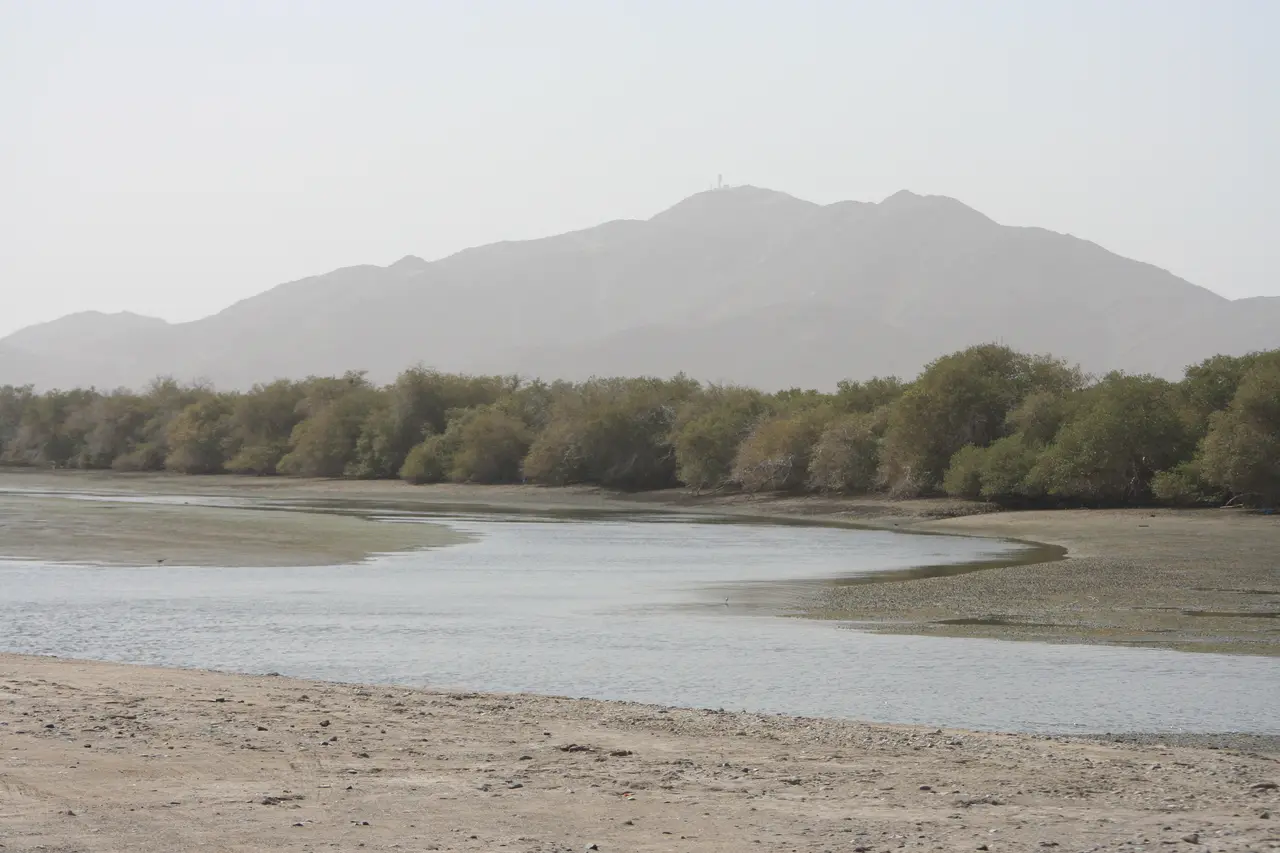
Walk along almost any stretch of the UAE's sheltered coast and you will meet the same tree. Its pale green leaves, grey-white bark and forest of upward-pointing roots belong to Avicennia marina, the grey mangrove. It is the only mangrove species native to the UAE, and it does much of the work that keeps the coast's wetlands functioning.
A Tree Built for Salt and Mud
Few land plants can grow in seawater, and the grey mangrove has several adaptations that make it possible. Its roots limit how much salt reaches the leaves, and salt that does get in is removed through small glands on the leaf surface and shed. The tree also grows in soft, waterlogged sediment where oxygen is scarce. To cope, it sends up pneumatophores, specialised breathing roots that rise out of the mud and take in air when the tide is out.
Where It Grows and Why Elevation Matters
Avicennia marina tends to occupy the intertidal zone, the band between high and low tide. Its exact position depends on how often the ground is flooded, how salty the water is and how much sediment settles there. Ground that is too low stays under water for most of the day, and ground that is too high rarely sees the tide. That is why restoration projects that plant saplings at the wrong height often fail, even when the seedlings are healthy. Before planting, the hydrology of a site needs to be understood: where the water comes in, how far it reaches, and whether the channels that carried tidal flow have been blocked by roads or fill.
More Than a Coastal Tree
The grey mangrove's value goes well beyond its own leaves. Its tangled roots slow the movement of water and trap fine sediment, which helps keep shorelines in place during storms and high tides. The forest canopy and the water beneath it shelter juvenile fish and crustaceans, and birds use the trees for roosting and feeding. Where mangroves are healthy, they also help filter nutrients from runoff before it reaches the open sea.
The Carbon Story
Mangroves are among the most carbon-rich ecosystems on the planet, but much of that carbon is not in the trees. It accumulates in the waterlogged soils beneath them, where decomposition is slow because there is little oxygen. This is why blue carbon projects look at soil as well as biomass, and why disturbing the mud through dredging or drainage can release carbon that took a long time to build up. A buyer evaluating a mangrove credit should ask the same questions as for any nature-based project: how the baseline was measured, what happens to the soil, and whether the area is protected for the long term. The due diligence checklist on this site covers these points in more detail.
Threats to the Grey Mangrove in the UAE
Coastal development is the most visible pressure. Reclamation, marinas and causeways can cut off tidal flow, bury root systems under fill, or change salinity so that mangroves decline over several years. Wastewater, oil spills and litter that smothers roots add further pressure in some locations. Because many of these effects are slow, a mangrove stand can look healthy from the road while its condition declines underneath.
Frequently Asked Questions
Is the grey mangrove the only mangrove in the UAE? It is the only mangrove species native to the UAE, which is why it is so central to coastal restoration here.
Why do mangroves have roots above the ground? Many grow in mud with little oxygen. Pneumatophores project above the surface so that the buried parts of the root system can get air.
Can you plant mangroves anywhere on the coast? No. Planting works best where the ground sits at the right tidal height and water flow has been restored. Planting in the wrong place wastes effort and seedlings.
Do mangroves store carbon only in their leaves and wood? No. A large share of the stored carbon is in the soil beneath the trees, which is why soil condition matters for carbon accounting.
What to Look for in a Mangrove Project
Ask where the planting sits in the tidal zone, whether the water supply has been assessed, and how survival is monitored after the first year. Good projects publish survey data and explain what they changed when seedlings failed. The grey mangrove is resilient, but it can only recover where the conditions that support it are in place.