UAE Blue Carbon Markets: Emerging Opportunity Across Mangrove and Seagrass Ecosystems
The UAE's coastal mangrove, seagrass, and coral reef ecosystems represent a significant emerging opportunity for biodiversity credit development, with growing institutional interest from European and Asian buyers seeking nature-based solutions.
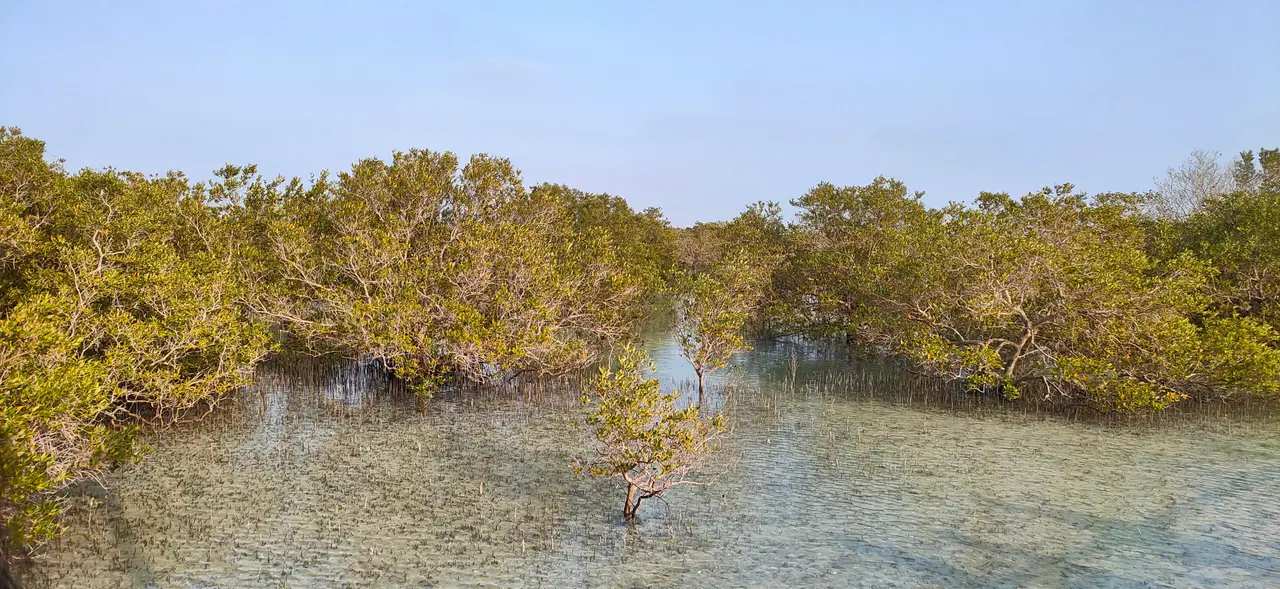
Biodiversity credits are an emerging market in the UAE, with significant potential across mangrove, seagrass, and coral reef ecosystems. Market prices for nature-based credits vary depending on project type, certification standard, and co-benefit profile — and the UAE's unique coastal ecosystems are attracting growing attention from institutional buyers worldwide.
UAE Coastal Ecosystems: A Blue Carbon Opportunity
The UAE's coastal zone hosts a remarkable diversity of blue carbon ecosystems: mangrove forests along the Abu Dhabi coastline, extensive seagrass meadows across the shallow Arabian Gulf shelf, and coral reef systems in the Gulf of Oman. Each of these ecosystem types stores carbon in distinct ways and provides a suite of biodiversity co-benefits — from fish nursery habitat to endangered species refugia — that are increasingly valued by corporate buyers seeking to meet nature-related disclosure requirements under frameworks such as TNFD and SBTN.
Mangrove soil carbon — accumulated over millennia in anaerobic sediments — sequesters carbon at rates significantly higher per hectare than equivalent areas of tropical rainforest. Seagrass meadows provide comparable blue carbon value alongside critical habitat for dugongs and sea turtles. These ecosystem characteristics, when certified under international frameworks such as Verra's VM0033 methodology, create high-quality nature-based credits with measurable biodiversity co-benefits.
VM0033: The Certification Framework
UAE mangrove and seagrass projects are being explored under Verra's VM0033 — Methodology for Tidal Wetland and Seagrass Restoration — one of the most scientifically rigorous carbon accounting frameworks available. VM0033 requires project developers to measure and model six distinct carbon pools and account for three greenhouse gases, making credits generated under this methodology particularly robust for institutional buyers subject to third-party audit requirements.
Biodiversity Co-Benefits: The Value Beyond Carbon
A key feature of UAE coastal ecosystem projects is the richness of potential biodiversity co-benefits. Abu Dhabi's mangrove areas provide habitat for the Socotra Cormorant — classified as Vulnerable by the IUCN — alongside flamingo colonies, hawksbill sea turtle nesting, and dugong feeding grounds. These documented biodiversity values allow buyers to report both carbon and biodiversity outcomes, which can support disclosures under frameworks such as the EU Corporate Sustainability Reporting Directive (CSRD). Whether a given credit meets a specific disclosure requirement depends on the reporting entity's own assessment, not on the credit alone.
Institutional Demand and Market Development
European and Asian institutional buyers are showing growing interest in UAE blue carbon opportunities, driven by CSRD compliance timelines and ESG disclosure requirements. The Abu Dhabi Global Market (ADGM) Carbon Trading Platform provides a regulated environment for credit transactions, supporting market development and price discovery. As the market matures, biodiversity credits represent a significant emerging opportunity across the UAE's coastal ecosystem portfolio.
What a Price Premium Does and Does Not Prove
A higher price is a signal, not a guarantee. UAE-origin credits can trade above the global average because buyers value local provenance, a regulated trading venue and co-benefit stories, but that premium lasts only as long as the evidence behind it. Buyers should separate three questions: whether the carbon was real and additional, whether the biodiversity claims were measured or only expected, and whether the credit can be counted once and only once in the buyer's own reporting.
Tidal wetland projects carry risks that a price chart does not show. Mangrove and seagrass carbon depends on the ecosystem staying wet, undisturbed and connected to the sea, so sea-level change, coastal development and dredging all bear on whether stored carbon remains stored. Credible methodologies address this through baselines, monitoring over time and buffer mechanisms that hold back a share of credits against reversal. Buyers should check how these provisions are applied, not only that they exist.
A Buyer's Verification Checklist
Before committing to a purchase, institutional buyers typically ask for the project description, the monitoring and verification reports, the registry record showing issuance and retirement status, and the independent verifier's opinion. For biodiversity co-benefits, they also look for baseline surveys and a clear statement of which species or habitats were measured and which were assumed. Claims that rest on expected outcomes should be labelled as such in any disclosure.
If a credit may later be used under Article 6 of the Paris Agreement, the buyer also needs to know whether a corresponding adjustment applies. A credit sold abroad may no longer be countable by the host country, and the buyer's own claim depends on that answer.
Frequently Asked Questions
Are UAE mangrove credits automatically compliant with CSRD? No. Credits can support a company's disclosure, but compliance depends on the reporting standard applied, the company's own materiality assessment and how the credit is described. Legal and sustainability advisers should confirm the approach.
Why do blue carbon credits often cost more than forest credits? Buyers pay for permanence assurances, verifiable soil carbon measurement and co-benefit evidence. Prices vary by project, vintage and standard, so any single premium figure should be checked against current transactions.
Where can a buyer check whether a credit has already been retired? Credits are tracked in the registry that issued them. A buyer should confirm serial numbers and retirement status directly in that registry before relying on a credit in any claim.