The Arabian Sand Gazelle: A Dune Species Where Captive Numbers Can Mislead
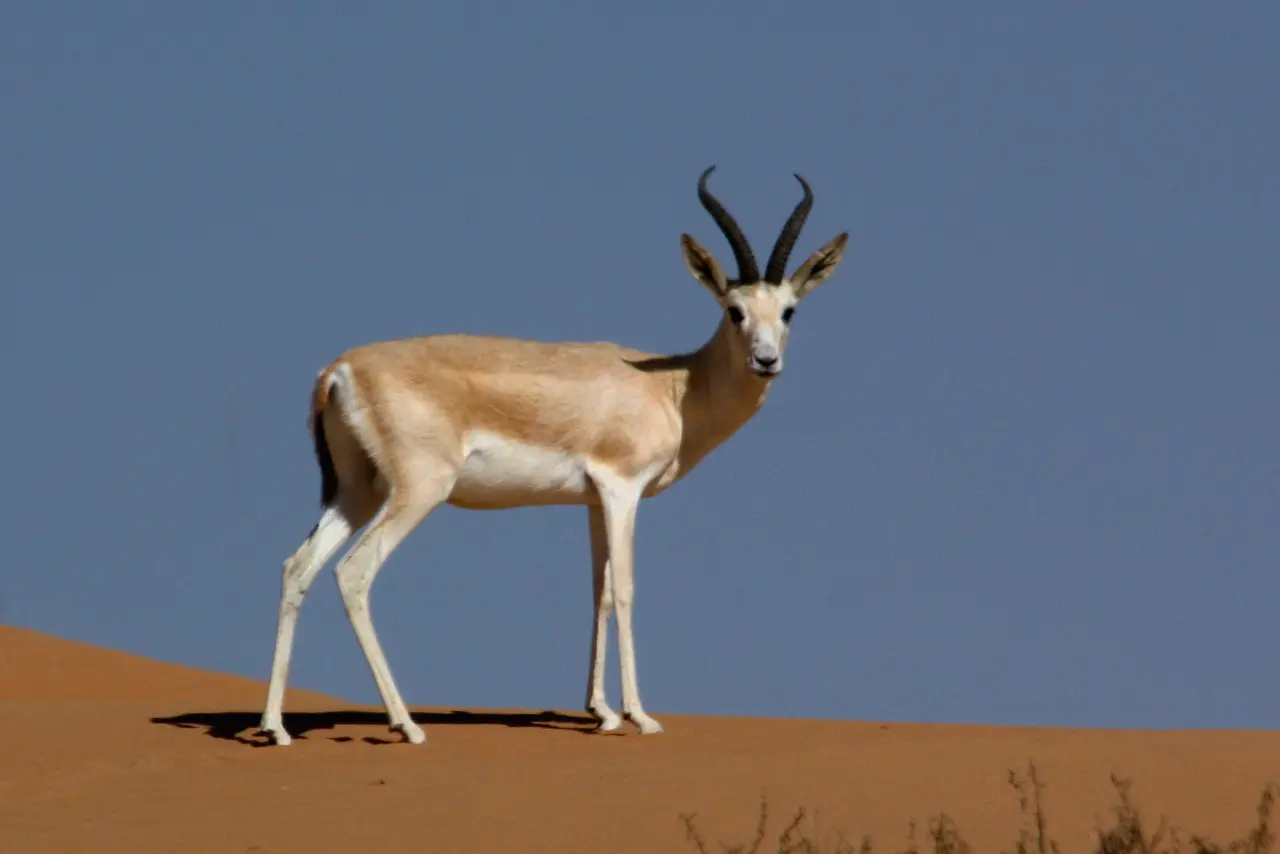
The Arabian sand gazelle, Gazella marica, is one of the desert animals most closely tied to the UAE's dunes and coastal plains. It is also easy to misread in conservation reporting, because a count inside a fenced reserve or breeding facility tells a different story from the number of animals living wild in open desert. For anyone reading a biodiversity claim that mentions gazelles, that difference matters.
A Species Recognised as Its Own
Older records sometimes treated the sand gazelle as a subspecies of the goitered gazelle. A 2010 genetic study found it to be a distinct lineage, and it is now generally treated as a separate species. The distinction matters for conservation, because a separate species needs its own assessment, its own population data and its own protection measures.
Why the Species Is Listed as Vulnerable
The IUCN lists the Arabian sand gazelle as Vulnerable, which means its wild populations face a high risk of extinction in the medium term if current pressures continue. The Emirates Environment Agency's species page describes it as threatened and names two main pressures: illegal hunting and degradation of its habitat.
Where It Lives in the UAE
The species prefers sand dunes and coastal plains, and avoids steep and rocky ground. In the UAE it has been recorded in protected desert areas, including the Arabian Oryx Reserve in Abu Dhabi and the Dubai Desert Conservation Reserve. Reserves protect habitat, but they are also islands in a landscape increasingly crossed by roads, development and visitors. The routes between protected areas matter nearly as much as the areas themselves.
Captive Breeding and Wild Numbers
The Emirates Environment Agency notes that numbers held in captivity, in reserves and in breeding programmes are noticeably higher than the number of wild animals. That gap is the key point for readers. A healthy count in a breeding facility does not show that wild populations are recovering, and a claim that relies on captive numbers should say so plainly.
Wild counts are harder to make than captive ones. Surveys in open desert usually rely on transects walked or driven at set intervals, sightings recorded with time and location, and in some cases camera traps placed at waterholes or along tracks. Each method has blind spots: animals move, they flee from vehicles, and they are hard to see in tall vegetation or in the heat of the day. A reliable count therefore states its method and its margin of error, and it is repeated over several seasons before a trend is claimed.
What Hunting and Habitat Loss Do
Illegal hunting removes adults directly, and in a small population the loss of a few animals can affect breeding prospects for years. Habitat degradation works more slowly. Vehicle tracks, litter and disturbance can push animals out of feeding and resting areas, and a fragmented dune system leaves fewer routes for animals to move between patches of suitable ground.
What Readers and Buyers Can Check
- Whether a claim reports wild or captive animals, and which of the two it counts.
- Whether the habitat is protected and monitored over time, not only at the moment of reporting.
- Whether the project measures hunting or disturbance, and what it does when it finds them.
- Whether the claim names the species and its conservation status, so that a reader can check it.
Frequently Asked Questions
Is the Arabian sand gazelle endangered? The IUCN lists it as Vulnerable. That status is a reason for careful monitoring, not a reason to assume every population is at the same level of risk.
Is it the same animal as the goitered gazelle? No. It was once treated as a subspecies, but a 2010 genetic study established it as a distinct lineage, and it is now generally treated as a separate species.
Do the oryx and the sand gazelle share protected land? Both have been recorded in protected desert areas, including the Arabian Oryx Reserve in Abu Dhabi. Shared reserves help both species, but they do not replace the wider dune and plain habitat each animal needs outside fences.
What should I do if I see one? Keep your distance, do not approach or feed it, and report the sighting to the relevant environmental authority.
Can a gazelle count in a reserve be used as evidence of recovery? Only with care. Captive and reserve numbers can be higher than wild numbers, so a claim should say which population it measures and how it was counted.
Related: The Arabian Oryx: From Extinction in the Wild to a UAE Desert Success Story | The Houbara Bustard: A Migratory Desert Bird and What Its Survival Asks of Conservation