Biodiversity Credits and Carbon Credits: How the UAE Is Bridging the Gap
For most of the past decade, the voluntary carbon market and the emerging biodiversity credit market developed along separate tracks. Carbon credits measured tonnes of CO2 avoided or removed; biodiversity credits measured habitat area, species populations, or ecosystem condition indices. Different methodologies, different buyers, different registries. That separation is now dissolving — and the UAE is positioned at the point of convergence.
The structural driver is buyer demand. Corporate sustainability teams increasingly report under TCFD for climate and TNFD for nature — the Taskforce on Nature-related Financial Disclosures, whose framework launched in 2023. The Science Based Targets initiative is developing FLAG standard v2 — covering forest, land, and agriculture companies — in alignment with the Corporate Net-Zero Standard released in June 2026. As these frameworks converge, the incentive to address both carbon and biodiversity through the same project pipeline grows sharper. The GLF Marketplace — the Global Landscapes Forum's credit platform — opened applications for biodiversity conservation and blue carbon projects in 2026, with funding up to $300,000 per project and Asia-Pacific listed alongside Africa as a priority region. These are not incremental signals; they mark the moment biodiversity finance infrastructure is catching up with carbon.
On the regulatory side, Article 6.4 of the Paris Agreement — the international crediting mechanism operationalised through Glasgow and Dubai — explicitly allows "non-greenhouse gas benefits" to be recognised alongside emission reductions. This creates regulatory space for projects to generate carbon credits under Article 6.4 while simultaneously generating biodiversity credits under nature-based frameworks. For project developers, stacking is not just permitted — it is becoming a competitive differentiator that commands a price premium. EU allowances currently trade at approximately €81 per tonne; voluntary credits with certified biodiversity co-benefits consistently price above unadorned carbon offsets from comparable projects.
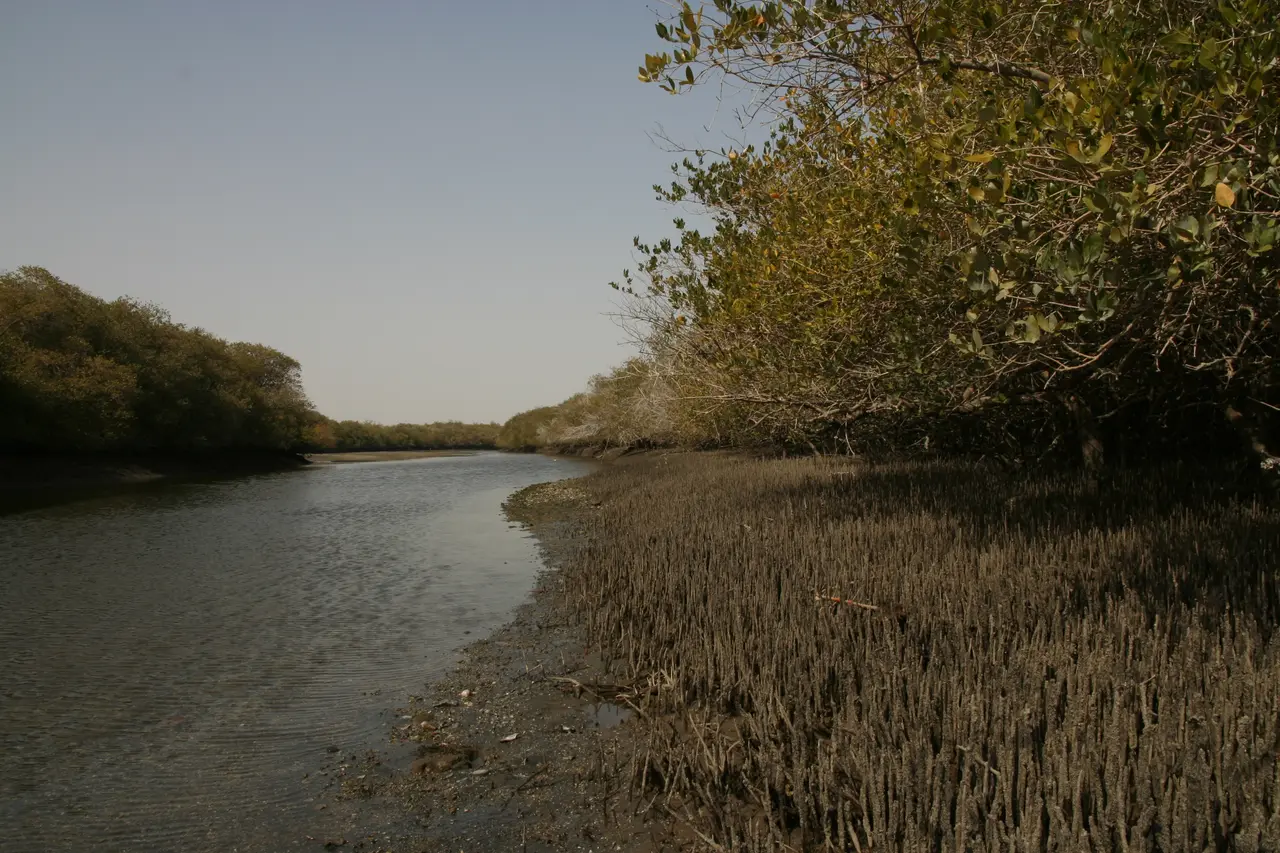
The UAE offers the clearest example of what convergence looks like in practice. Abu Dhabi's mangrove restoration programmes — targeting 100 million trees by 2030, with the Jubail Mangrove Park as the flagship — generate measurable outcomes on both dimensions. Mangroves sequester 0.6–1.7 tonnes of carbon per hectare per year in aboveground biomass, with substantially more stored belowground in peat. They simultaneously provide habitat for hawksbill sea turtles, Socotra cormorants, and a range of reef fish species. A single certified mangrove project in Abu Dhabi can legitimately issue carbon credits under Verra's VCS methodology and biodiversity credits under Plan Vivo or emerging Biodiversity Credit Alliance frameworks.
ADGM's Nature-Based Solutions regulatory sandbox explicitly supports dual-credit projects. Abu Dhabi's 2030 Nature Conservation Strategy sets quantitative targets for mangrove cover, coral reef restoration, and protected marine area expansion — all translating into project pipelines that credit buyers can support. The Voluntary Carbon Markets Integrity Initiative (VCMI) claims standard now rewards projects with high biodiversity co-benefits with a premium tier, translating nature value directly into price premium.
In July 2026, the UAE published its 'Host Party Participation Requirements for Article 6.4' with the UNFCCC, formally listing eligible project sectors: utility-scale and distributed solar, wind, waste-to-energy, energy efficiency (industrial, buildings, district cooling, transport), mangrove restoration, afforestation, ecosystem restoration, and blue carbon. Crucially, the UAE is positioning itself as both a buyer AND a seller under Article 6.4 — it has already signed a Memorandum of Understanding with Paraguay at COP28, and joined Japan's Joint Crediting Mechanism in April 2024.
For buyers, the convergence delivers three practical advantages. First, a smaller number of higher-quality projects can simultaneously address both climate and nature reporting obligations. Second, UAE projects — with their dual certification pathways and ADGM regulatory infrastructure — offer a functioning model of what stacked credits look like in a regulated market. Third, as TNFD reporting becomes mandatory in several jurisdictions and investors increasingly scrutinise nature-related risks, early-mover advantage in biodiversity credit procurement will matter more than it does today.
The walls between carbon and biodiversity markets are coming down. In the UAE, with its mangrove coastlines, evolving regulatory architecture, and COP28 diplomatic capital, they were never particularly high. Read more about ADGM's carbon market framework and Abu Dhabi's mangrove restoration programmes in our other articles on this site.
Frequently Asked Questions
What is the difference between a carbon credit and a biodiversity credit? Carbon credits measure tonnes of CO2 avoided or removed. Biodiversity credits measure habitat area, species populations or ecosystem condition. They have traditionally used different methodologies, buyers and registries.
Can one project issue both types of credit? Article 6.4 of the Paris Agreement allows non-greenhouse gas benefits to be recognised alongside emission reductions, which creates regulatory space for stacking. Whether a given project can do so depends on the methodologies and registries it uses, so buyers should check the certification details project by project.
Why are buyers interested in both? Companies increasingly report under TCFD for climate and TNFD for nature. A smaller number of higher-quality projects can address both reporting obligations at once.
Why is the UAE relevant to this convergence? Its mangrove restoration programmes deliver measurable results on both carbon and habitat, and ADGM's Nature-Based Solutions regulatory sandbox supports dual-credit projects.
Related: Abu Dhabi Mangroves: A Carbon and Biodiversity Powerhouse | ADGM and Carbon Markets: The UAE's Financial Framework