The Ghaf Tree: The UAE's National Tree and a Keystone of the Desert
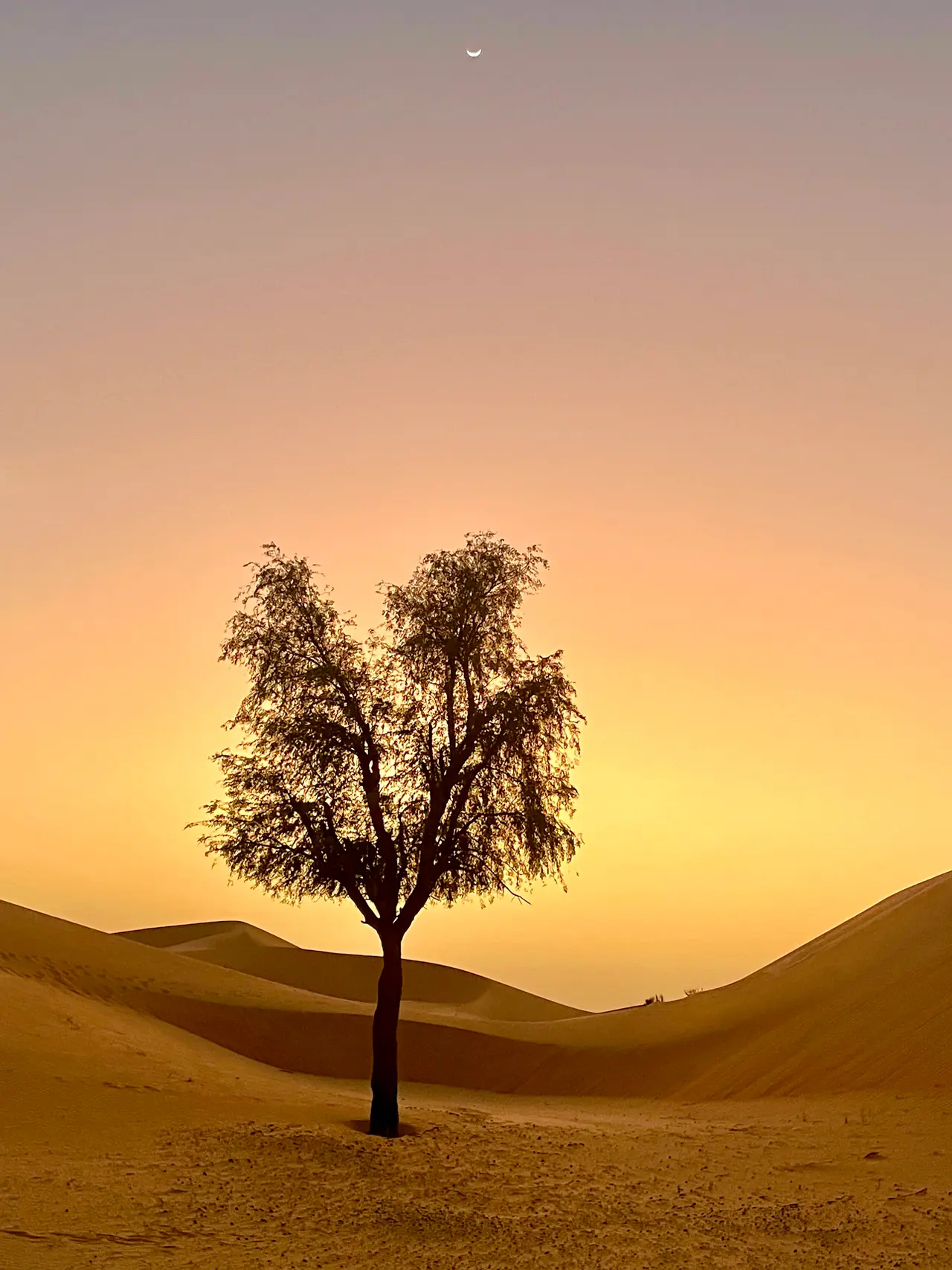
Drive inland across the UAE's gravel plains and sand dunes and one tree appears again and again: the ghaf (Prosopis cineraria). Named the national tree of the UAE, it is more than a symbol. In a landscape of extreme heat and very little rain, the ghaf shelters animals, enriches the soil and has supported people for generations.
A Tree Built for Extremes
The ghaf is an evergreen, slow-growing tree with a feathery, grey-green canopy. It thrives where few other trees can, and several traits explain how:
- Deep roots: the roots reach far down in search of groundwater, which lets the tree stay green through long dry spells.
- Drought and salt tolerance: it grows on sandy and mildly saline soils where many species fail.
- Small leaves: fine leaflets limit water loss in strong sun.
- Nitrogen fixing: as a member of the legume family, it works with soil bacteria to add nitrogen to poor desert soil.
Why Ecologists Call It a Keystone
A keystone species supports many others. Beneath a ghaf the ground is cooler and the soil is often richer than in the open desert, creating a small refuge. Plants, insects, reptiles and small mammals gather there, and birds use the branches for perching and nesting. Grazing animals rely on its shade and on fallen leaves and pods. Ghaf woodland is therefore a hub of local biodiversity, not just a line of trees.
A Tree Woven into Culture
For generations the ghaf has been valued in the Arabian Peninsula for shade, fodder for livestock and traditional uses. It is closely tied to Emirati heritage, which is one reason it was chosen as a national emblem. Many individual trees are old and are treated with respect by local communities.
Pressures on Ghaf Woodland
Because ghaf grows slowly and depends on deep groundwater, it is vulnerable to change. The main pressures include:
- Development: roads, housing and industrial sites can remove trees that took a very long time to mature.
- Groundwater decline: where the water table falls, even deep roots can no longer reach water.
- Overgrazing and off-road driving: these damage seedlings and compact the soil around established trees.
- Pests and disease: stressed trees are more susceptible to damage from insects and fungi.
Protection and Restoration
Conservation efforts in the UAE include protecting existing ghaf stands, planting seedlings in suitable areas and raising public awareness. Growing ghaf from seed and nursery stock helps restoration, but young trees need protection from grazing and careful watering while their roots establish. Restoring native desert woodland also offers a nature-based approach to habitat recovery that sits alongside the country's mangrove work, with different species and different benefits.
Why It Matters for Biodiversity Planning
Ghaf woodland shows why biodiversity cannot be measured by tree counts alone. A project that plants trees without considering water, grazing and soil can fail, while protecting a mature stand safeguards a whole community of species. This logic applies to any nature finance project: habitat quality, local conditions and long-term management matter as much as the number of plants.
Life Under the Canopy Changes With the Seasons
A ghaf woodland does not look the same all year. After rain, grasses and short-lived herbs can appear in the shade, and insects gather around the flowers and developing pods. The pods are browsed by camels, goats and other livestock, and seeds that pass through animal guts can be carried to new places. In this way the tree helps spread its own offspring while feeding the animals that depend on it. Anyone assessing a ghaf stand for biodiversity should therefore look at it in more than one season, because the species present in a dry month can differ from those present after a wet spell.
Frequently Asked Questions
What is the UAE's national tree? The ghaf, Prosopis cineraria, is the national tree of the UAE.
How does the ghaf survive without much rain? Its deep roots reach groundwater, and its small leaves reduce water loss.
Why does ghaf improve the soil? As a legume, it hosts bacteria that fix nitrogen, and its fallen leaves add organic matter.
Can anyone cut down a ghaf tree? Ghaf is protected and valued in the UAE, so people should check local rules and never damage trees on public or protected land.
Related: The Arabian Oryx: From Extinction in the Wild to a UAE Desert Success Story | Abu Dhabi Mangroves: A Carbon and Biodiversity Powerhouse