Abu Dhabi's Dugongs: What the 2024 Seagrass Survey Tells Us
Abu Dhabi's 2024 aerial survey estimated more than 3,500 dugongs, a marine mammal that depends on seagrass. Here is what the count means, why the species is vulnerable, and what it reveals about the health of the coast.
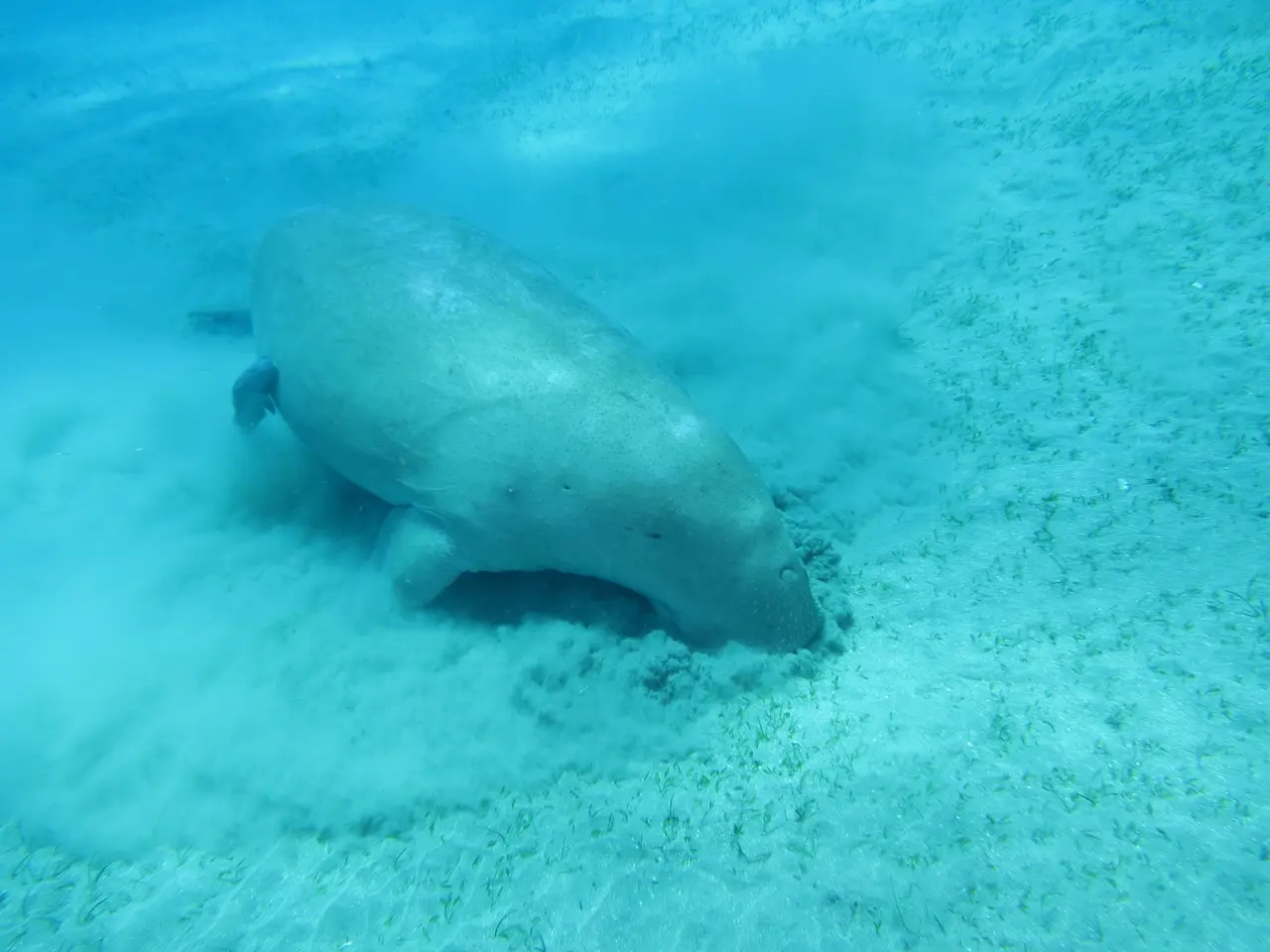
Few animals depend on the UAE's seabed as directly as the dugong. This gentle marine mammal feeds almost entirely on seagrass, so the health of its meadows is a reliable signal for the health of the coast. Abu Dhabi's latest aerial survey gives the clearest picture so far of how many dugongs live in the emirate's waters and what still threatens them.
A Seagrass Grazer in Emirati Waters
The dugong (Dugong dugon) lives in shallow coastal water and grazes seagrass from the seabed. Unlike many marine species, it does not range far from the meadows it feeds on. A meadow that is dredged, buried in sediment or smothered by pollution does not simply shrink; it can stop supporting dugongs altogether. That is why dugong numbers are read alongside the condition of seagrass beds, and why protecting one usually protects the other.
What the 2024 Aerial Survey Found
The Environment Agency Abu Dhabi (EAD) completed an aerial survey covering more than 8,000 square kilometres of marine habitat. According to the agency, the dugong population was estimated at over 3,500 individuals in 2024. EAD describes Abu Dhabi as the second-largest dugong habitat in the world, after Australia. The results were published in June 2025. They are an estimate from one survey, not a headcount of every animal, and they should be read that way.
Why Dugongs Are Vulnerable
The dugong is a vulnerable species, and the EAD announcement names one of its most direct threats. Dugongs must surface to breathe, which makes them prone to becoming entangled in fishing nets. Abu Dhabi has introduced a fishing net ban in its waters to prevent this accidental capture. Other pressures that researchers and conservation groups usually list include the loss of habitat to coastal development, marine pollution and collisions with boats.
Dugongs also reproduce slowly, which makes it hard for a population to recover from losses. Females generally do not give birth until they are roughly nine to seventeen years old, and then typically calve only every three to seven years. A few lost adults can therefore take a long time to replace, even where conditions improve.
Why Seagrass Matters Beyond the Dugong
A seagrass meadow supports far more than dugongs. It helps stabilise sediment, provides nursery habitat for fish and shellfish, and, as the VM0033 explainer on this site describes, stores carbon in its soils. The wildlife case and the blue carbon case therefore point to the same place: a meadow kept in good health. A meadow that has already been lost stores no carbon and feeds no animals.
How to Read a Survey Figure
Readers who follow marine conservation in Abu Dhabi should start with EAD's own publications and survey announcements, which give counts together with the survey year and area. When a number appears in a press release or social post, check whether it comes from a recent survey or from an older estimate. Earlier published estimates for the emirate were lower, and an old figure is easy to repeat as if it were current.
Reading Repeat Surveys
Repeat surveys matter more than any single count. If EAD repeats an aerial survey with the same method and the same area, the difference between the two counts says more than either figure alone. An estimate can rise because detection improved, not only because the number of animals grew, so the methods note in a survey report is worth reading before drawing a trend.
Frequently Asked Questions
How many dugongs live in Abu Dhabi? EAD's 2024 aerial survey estimated more than 3,500 individuals. This is an estimate from a survey, not a count of every animal.
Are dugongs protected in the UAE? Abu Dhabi has a fishing net ban in its waters to prevent accidental capture of dugongs. This is the protective measure the agency cites in its announcement.
Is a dugong the same as a manatee? No, though they are close relatives. Both belong to the order Sirenia, but dugongs live only in marine waters, while manatees also use rivers and freshwater.
Can seagrass restoration help dugongs? It can help where meadows have been lost, but restoration takes years and only works once the original pressure, such as dredging or pollution, has been removed.
What to Ask About Any Conservation Figure
Ask which survey produced the number, when it was collected, what area it covers, and whether the claim refers to the emirate or to the wider Gulf. These questions separate a verified count from an approximate one.