Environmental Impact Assessments and Biodiversity Offsets in the UAE: What Developers Must Show
Before a coastal road, marina or solar plant goes ahead in the UAE, its effect on wildlife has to be assessed. This explainer covers how impact assessments work, why avoidance comes before offsets, and what a credible offset plan should show.
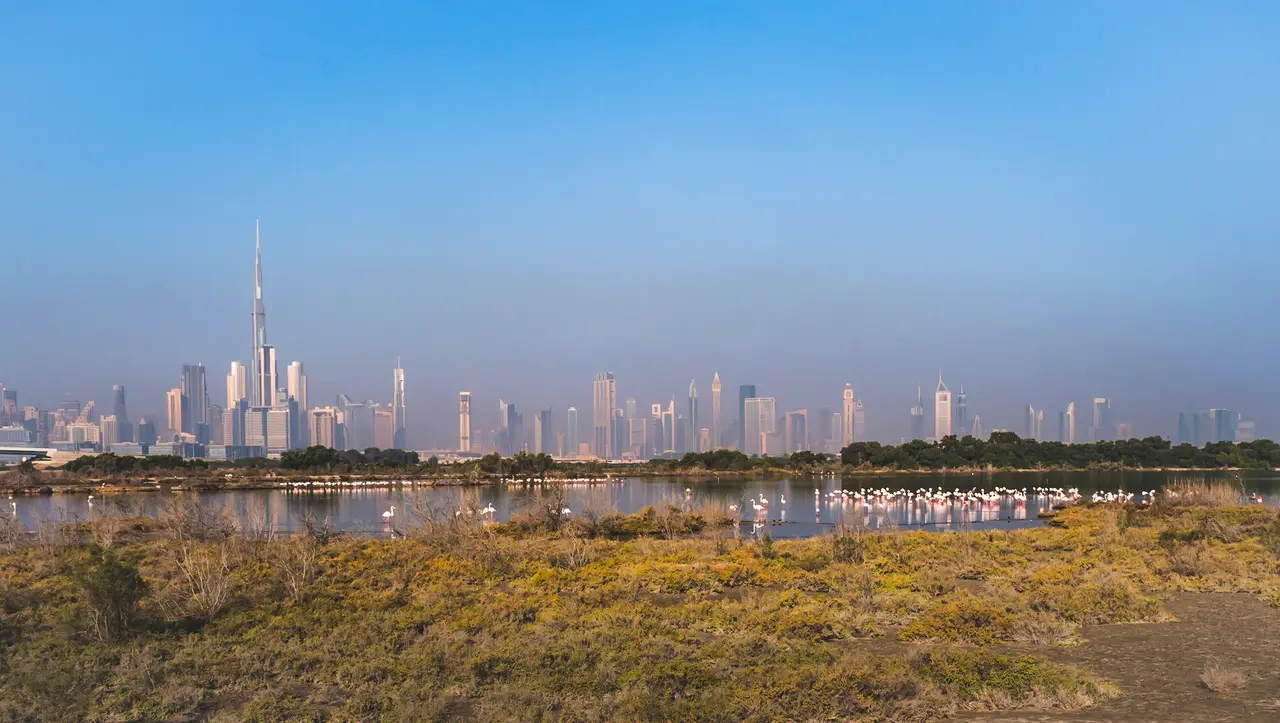
Before a coastal road, marina or solar plant is built in the UAE, someone has to ask what it will do to the wildlife around it. The environmental impact assessment, or EIA, is the usual tool for asking that question. Biodiversity offsets are what some projects use when the damage cannot be avoided. Both are often treated as paperwork. In practice, the quality of the assessment decides whether an offset means anything.
The Mitigation Hierarchy
Most biodiversity frameworks use a sequence often called the mitigation hierarchy: avoid harm first, then minimise what cannot be avoided, restore what has been damaged, and only then offset the residual loss. Offsets sit at the end of this sequence for good reason. A developer that routes a road around a mangrove stand has avoided a loss that an offset elsewhere could never fully replace, because the original stand has its own age, location and connections. A developer that reaches for an offset first has skipped the cheaper and more reliable steps.
What an Impact Assessment Should Contain
A useful assessment starts with a baseline: which habitats, species and ecological processes exist on and near the site, recorded across a full season where possible. The baseline should cover migrating birds, nesting turtles, seagrass beds and intertidal flats, not only the species that are easy to see from a car. It should then describe direct effects, such as clearance and dredging, and indirect ones, such as lighting, noise, shading, changes to water flow and the disturbance caused by more people. An assessment that lists impacts without a method for measuring them has not done the job.
Where Offsets Go Wrong
Offsets fail in predictable ways. The first is a loss measured in one unit and an offset measured in another, such as hectares cleared compared with seedlings planted. The second is an offset that sits far from the affected population, so a species that depends on one coastline gains nothing from a site on another. The third is a restoration that is planted but never monitored, so no one can tell whether it survived. A planting count is not a habitat outcome. The real question is how many trees are alive, growing and used by the animals the impact displaced.
Checking the Offset Plan
A credible offset plan names the habitat lost and the habitat gained, with areas measured the same way. It sets a monitoring period, usually several years, and says who pays for monitoring after the developer's obligation ends. It explains the ratio between loss and gain and why that ratio was chosen. Ask whether the offset site already had legal protection. If it did, the offset may add little, because the outcome was never at risk. This is the same additionality question asked of carbon credits, and it has the same answer: a gain counts only if it would not have happened without the project.
Rules Change, So Check the Source
Environmental rules in the UAE sit at federal and emirate level, and the requirements for a given project depend on where it is and which authority reviews it. Environment Agency Abu Dhabi and the environmental authorities in other emirates publish their own guidance. Before relying on any ratio or procedure quoted in a report, check the current version from the authority itself. Requirements change, and an offset agreed under an older rule may not meet a newer one. Buyers and investors should treat a developer's summary as a starting point, not the final word.
Frequently Asked Questions
Is an impact assessment the same as a biodiversity offset? No. An assessment identifies and evaluates impacts. An offset is one possible response to the impacts that remain after avoidance and mitigation.
Can a developer offset any habitat loss? Not in a meaningful way. An offset has to match the habitat and species affected, and it should sit where it serves the same ecological function.
Does planting trees count as an offset? Planting is only a start. It counts as an outcome only when the trees survive and the habitat develops, which monitoring data has to show.
What should an investor ask first? Ask for the baseline survey, the list of impacts, the mitigation steps taken before any offset, and a monitoring plan with named funding.